Step 2: Discover
Empathy Mapping & Identifying Barriers
Ground your redesign in the real stories of working learners and supervisors.

Empathy Mapping
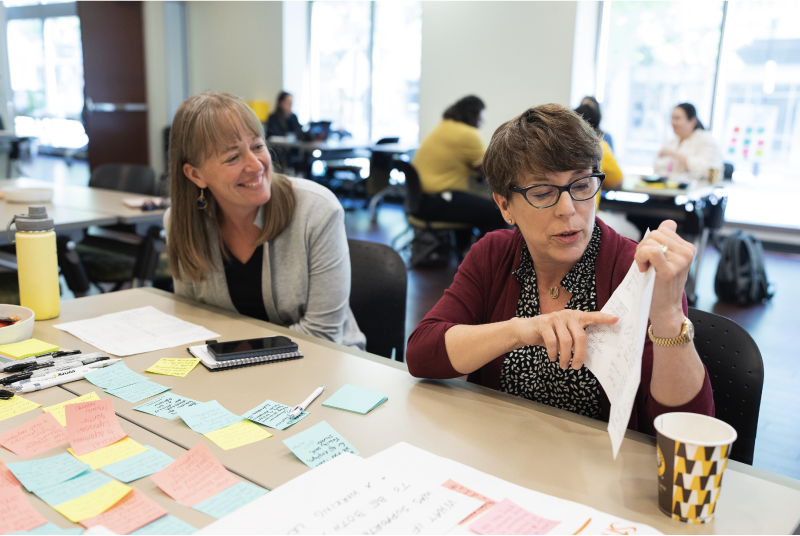
Once your empathy interviews are complete, the next step is to map your shared insight. This brings together what both learners and staff have experienced, to help see where systems are working and where barriers exist. By making those patterns visible, empathy mapping provides institutions with a clear foundation for meaningful change.
To do this, teams organize what they heard into four simple categories that capture the full experience: what people say, what they do, what they think, and how they feel.
- Says: What people say about their experience in their own words.
- Does: People’s day-to-day actions, habits, and routines.
- Thinks: People’s unspoken worries, hopes, and considerations.
- Feels: People’s emotional experience, such as stress, confidence, frustration, or motivation.
Highlight words and moments that show strong emotions like stress, pride, confusion, or relief. These emotional drivers reveal what matters most.
Look for moments when words and actions don’t line up. These often reveal hidden tensions.
Spot patterns that show up across many experiences.
Identifying Pain Points & Barriers
Once you’ve mapped your insights, you should have a clearer picture of where challenges are showing up in the working learner experience. Review what you’ve gathered and look for patterns, grouping them into pain points: the individual frustrations learners describe, and barriers: the system-level issues that affect many people and require redesign.
A strong barrier is one that is centered on the user, reflects a systemic breakdown, has equity implications, and is actionable.
Resources
Looking for hands-on support?
Work+ partners with institutions to facilitate the process and move ideas into action.