Step 3: Design
Reframing Challenges with How Might We (HMW) Questions
Reframing challenges with "How might we" questions helps ensure redesigned roles support student learning and career growth. It keeps teams focused on clear outcomes, encourages reflection, and aligns work experiences with the skills employers value, including the NACE competencies.

Reframing with How Might We (HMW) Questions
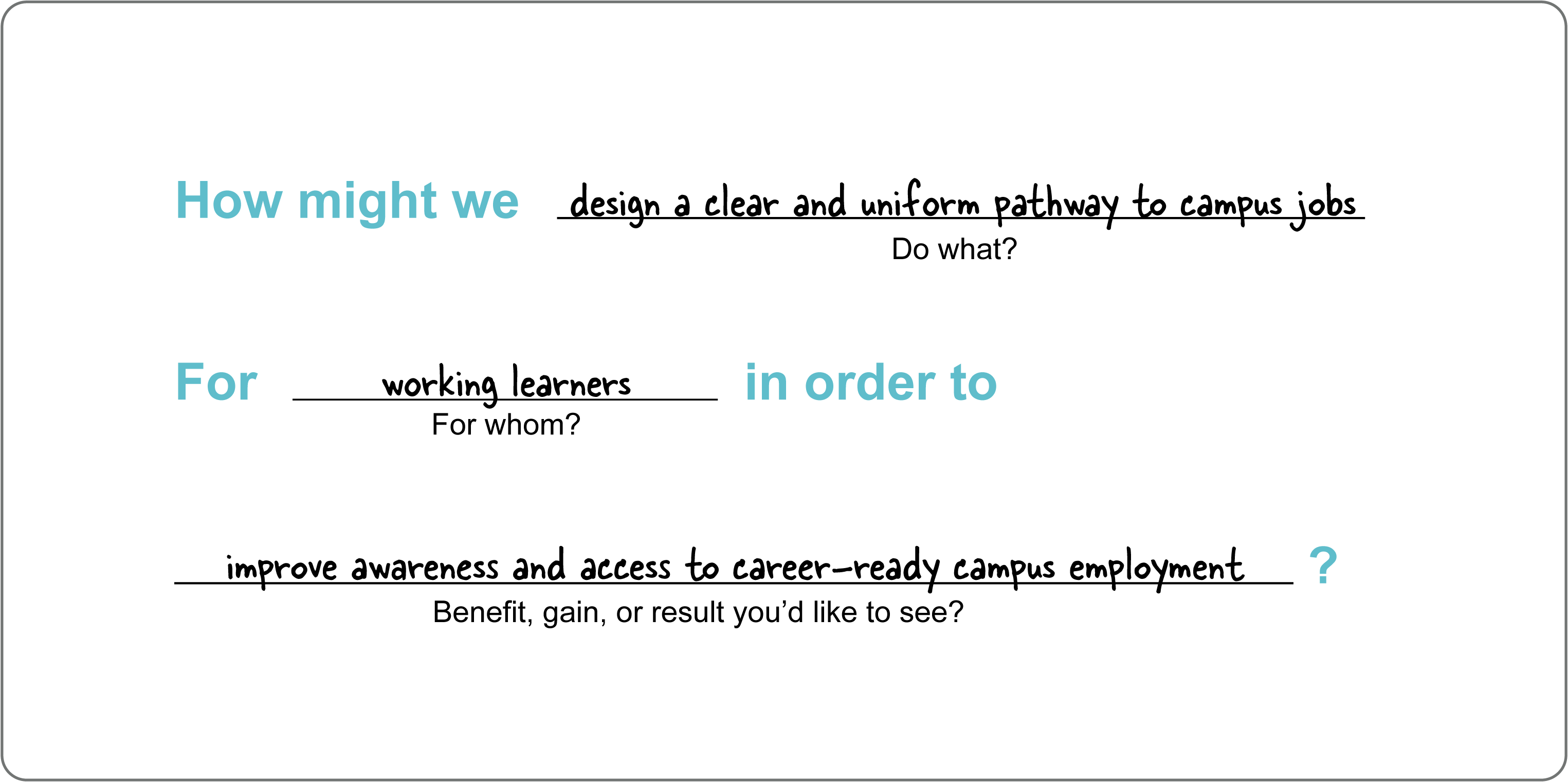
“How Might We” questions help turn problems into possibilities. Once you’ve identified pain points and barriers, these questions invite teams to explore solutions without jumping too quickly to answers.
By framing challenges as “How might we…,” you keep the focus on learners, encourage creativity, and open the door to multiple approaches—making it easier to move from understanding what’s broken to imagining what could work better.
Good “How Might We” questions are:
- Narrow enough to focus
- Broad enough to allow creativity
- Rooted in user needs
Ideation: Crazy Eights
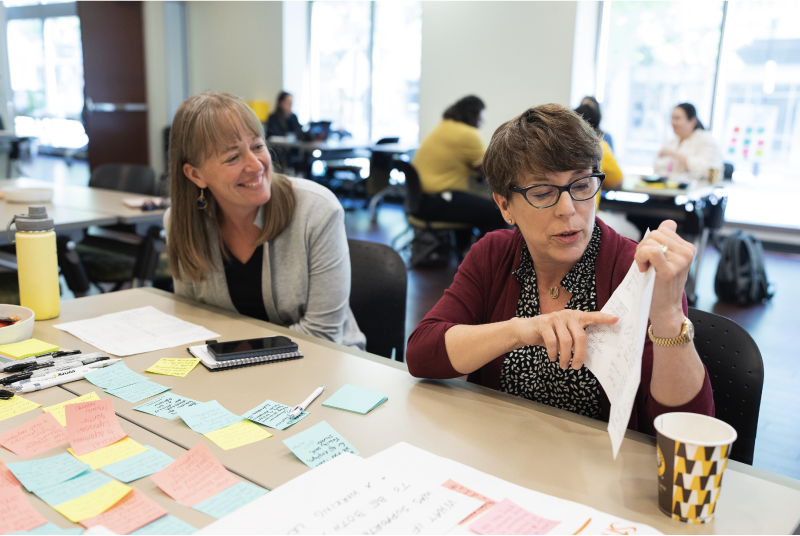
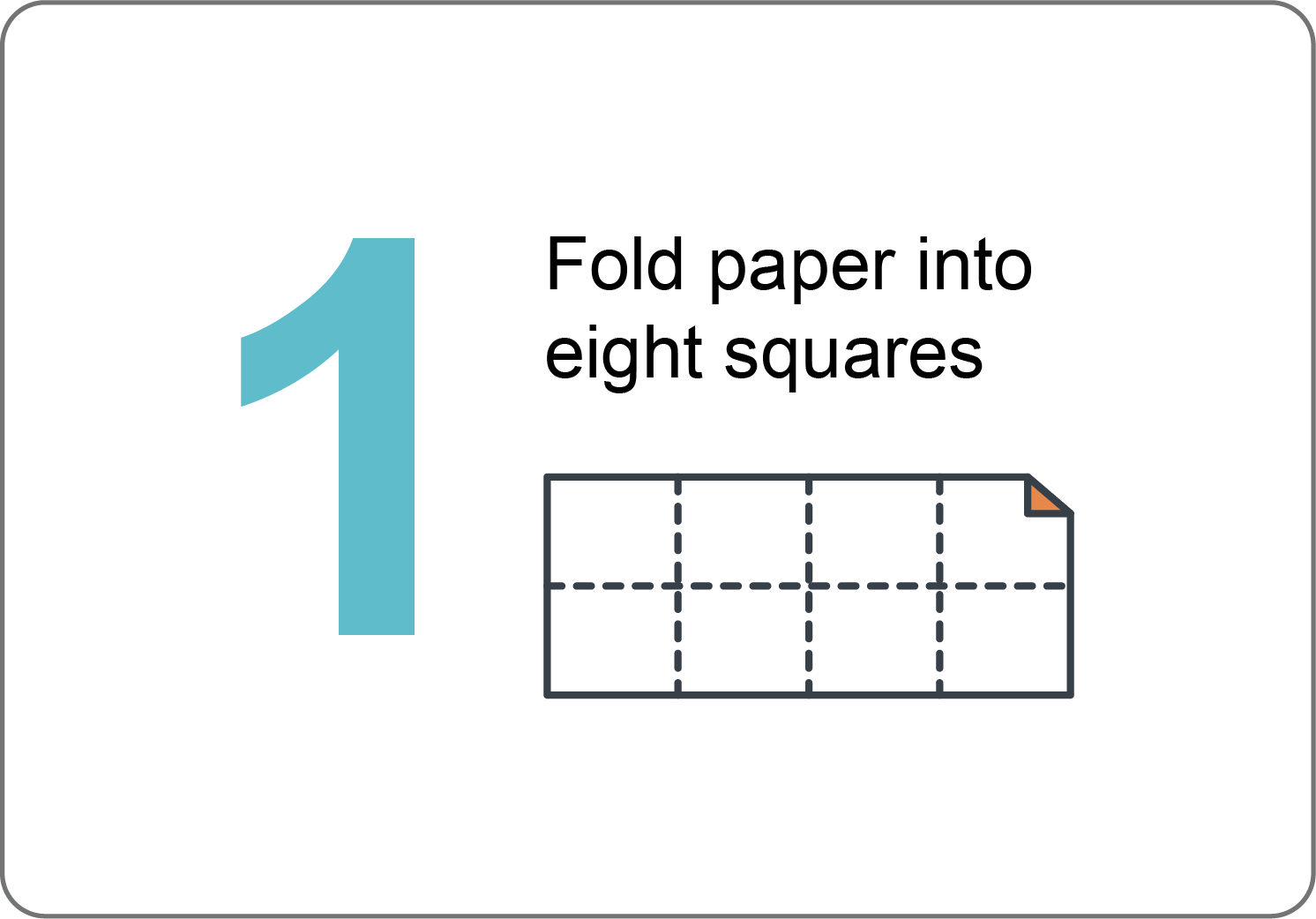
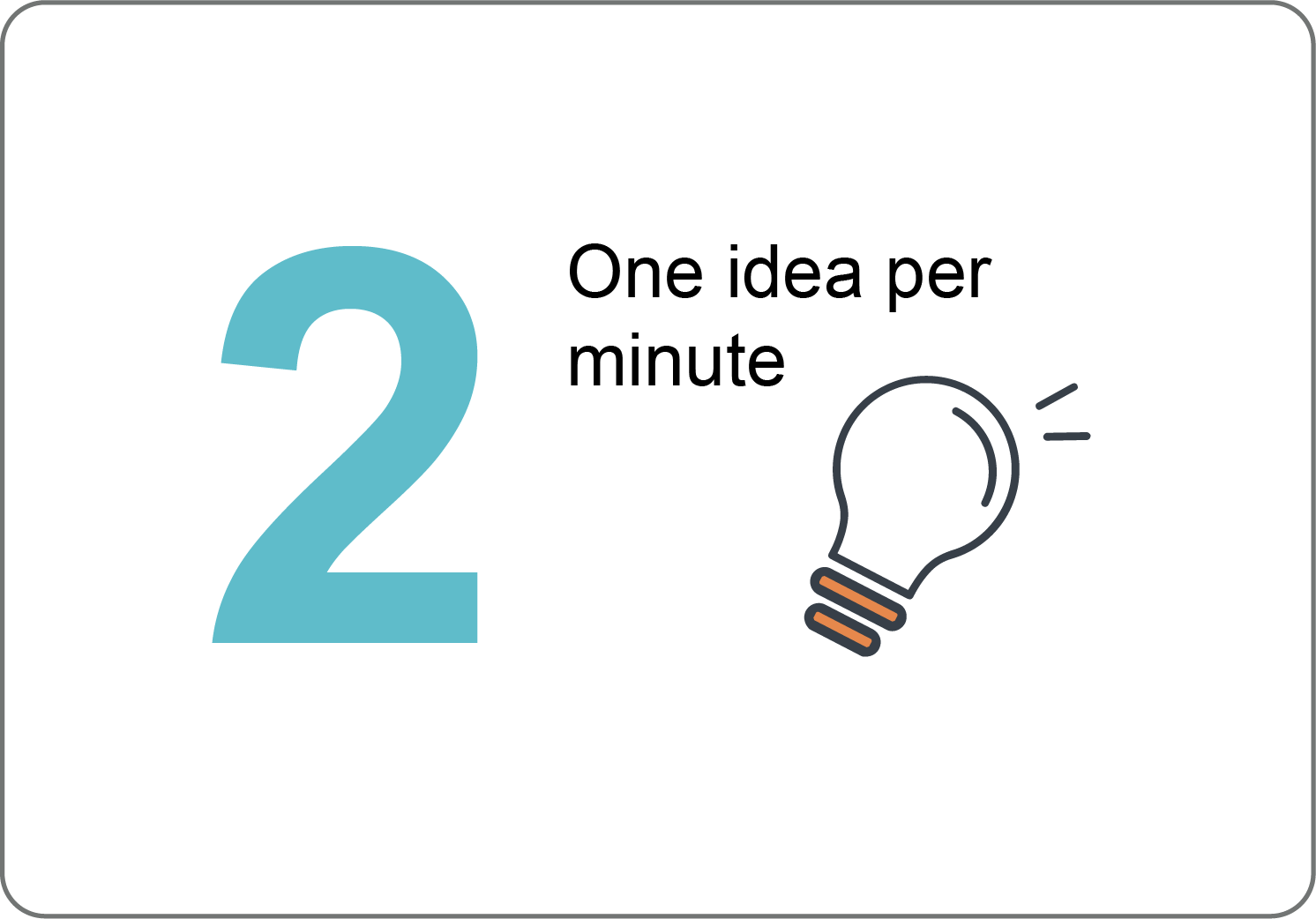
“How might we” questions help focus brainstorming on the challenges that matter most. The next step would be to engage in an activity such as Crazy Eights. In Crazy Eights, each person quickly sketches or writes eight ideas in a short period of time. It is intended to be a fast, low-pressure approach to encourage creativity, produce a wide range of possibilities, and help teams move from identifying problems to imagining practical solutions.
Looking for hands-on support?
Work+ partners with institutions to facilitate the process and move ideas into action.